Physical Address
304 North Cardinal St.
Dorchester Center, MA 02124
Physical Address
304 North Cardinal St.
Dorchester Center, MA 02124

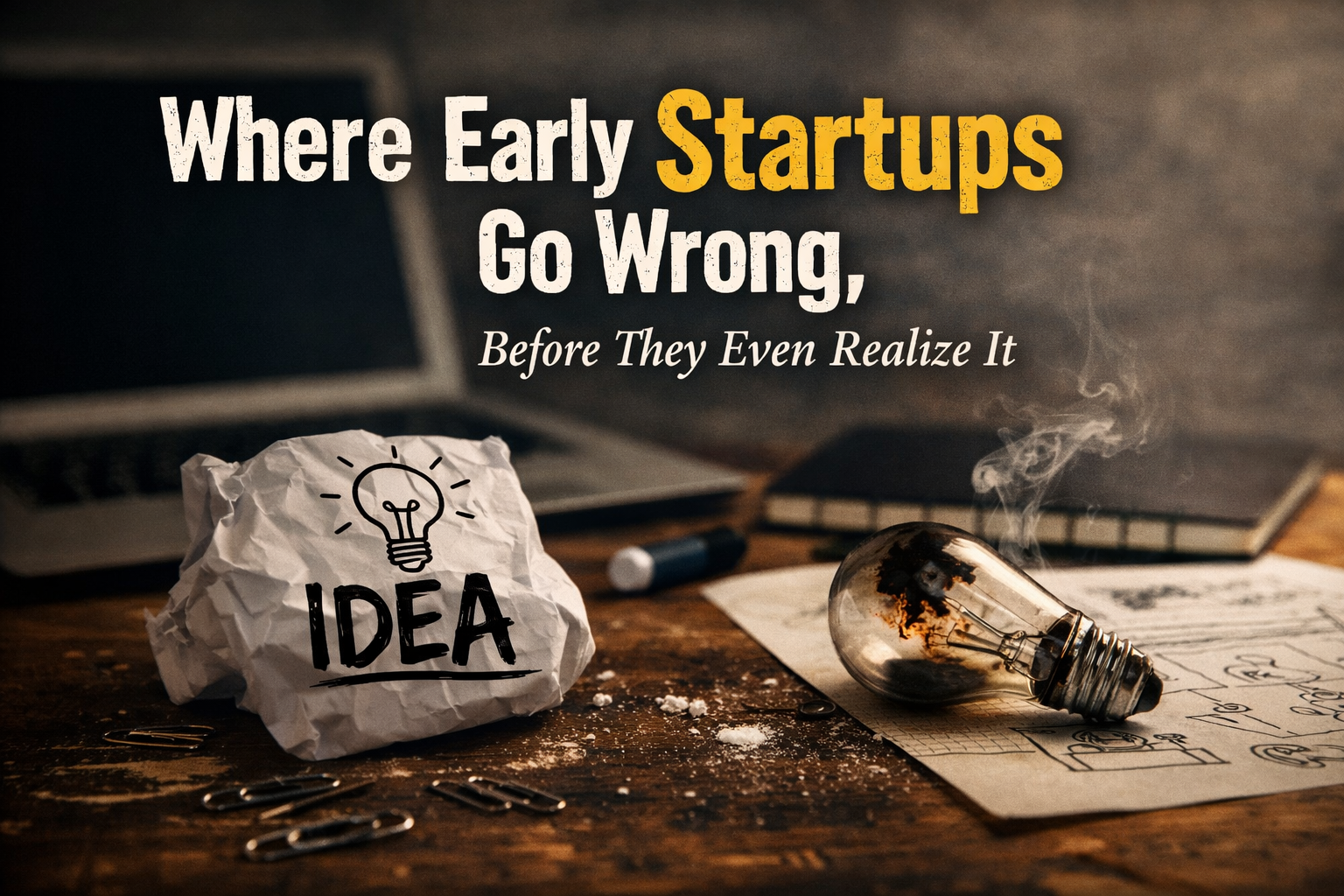
Starting a business is intoxicating. The rush of possibility, the fire of your own ambition, the allure of building something from nothing it’s addictive. But most early startups fail not because founders lack effort, creativity, or even money. They fail because they start in the wrong direction, long before they even notice. Passion without clarity, action without insight, and ideas without grounding in reality are a fatal combination.
The earliest misstep is deceptively simple: founders confuse what they want with what the world needs. Loving an idea doesn’t guarantee anyone else will. Most founders pour months into concepts that only solve their own frustrations, only to discover the market doesn’t care. It’s a bitter lesson, but it’s universal, whether you’re building software, a service, a product, or a creative venture.
The excitement of creation is intoxicating. Our brains love novelty. When we spot a “gap,” our instinct is to fill it. But often, the gap exists only in our imagination. Founders latch onto ideas, “This app will change the world,” “My service will fix everything,” “My product is unique” without stopping to ask: Does this problem actually exist for anyone else?
Psychologically, it’s easy to rationalize the obsession. You tell yourself: “If I feel this need, surely others feel it too.” Sometimes yes, sometimes no. The tragedy is that months of work, resources, and energy get trapped in solving an imaginary problem, a painful and invisible failure.
Founders often seek validation in the wrong places. Likes, compliments, and encouragement feel reassuring, but they’re not a substitute for real-world proof. True validation is messy: it’s a customer reaching into their wallet, using your solution, and returning again. It’s hearing “I’ll switch to this tomorrow” rather than “This looks cool.”
The danger is subtle. Early positive signals polite testers, friendly nods, social media likes create false confidence. It’s comforting, seductive, and dangerous. Without honest validation, founders act on illusions, accelerating toward burnout and disappointment.
One of the most overlooked mistakes is overcomplication. Founders instinctively try to show value by building everything at once. Every feature, every option, every improvement crammed into version one. The belief is that complexity signals sophistication. The truth is simpler: it signals confusion.
The brain loves solutions that are understandable and immediate. Whether it’s a product, a service, or a platform, simplicity communicates clarity. Complexity, especially early on, buries the real value and leaves customers and even founders themselves disoriented.
Another universal blind spot is misunderstanding the landscape. No competition is often mistaken for opportunity, when it can actually signal lack of demand. Conversely, thriving competitors can validate the market, revealing real pain points and adoption patterns.
Timing matters too. Even a brilliant idea will fail if the world isn’t ready infrastructure, habits, social norms, and economic context all influence adoption. Premature launches waste energy and resources; delayed insights squander momentum. Successful founders sense both the market’s pulse and its readiness.
Founders obsess over logic: features, efficiency, growth metrics. But adoption is driven by emotion: relief, excitement, belonging, or even fear of missing out. People adopt solutions not because they’re logical, but because they feel a difference.
Ignoring emotional drivers is a silent killer. Even the most technically brilliant solution can fail if it doesn’t resonate with human experience. Every choice a founder makes should consider this: Does this product, service, or idea touch someone’s life meaningfully?
Skipping the fundamentals market understanding, real validation, simplicity, and emotional resonance creates cascading failures. Founders burn capital, energy, and confidence chasing illusions. Months can vanish in a haze of activity that feels productive but changes nothing. The result isn’t just a failed startup; it’s disillusionment, fatigue, and lost potential.
The irony is brutal: the solution isn’t more hustle, more features, or more marketing. It’s slowing down, listening, observing, empathizing, and iterating based on reality, not assumption.
Before investing time, money, or energy, founders must ask:
Answering these questions rigorously doesn’t guarantee success, but ignoring them almost guarantees failure. The founders who succeed aren’t the ones with the flashiest idea, the smoothest pitch, or the trendiest product. They are the ones who understand the human experience behind their solution, and build with precision, empathy, and insight.
Early startups don’t fail because of lack of passion or talent. They fail because founders charge forward without clarity, acting on assumption instead of insight. Passion without precision, action without empathy, and ideas without grounding in reality burn out fast. The invisible edge of every successful venture is understanding the people it serves, deeply and honestly, before building anything at all.
And that, that is where you win.